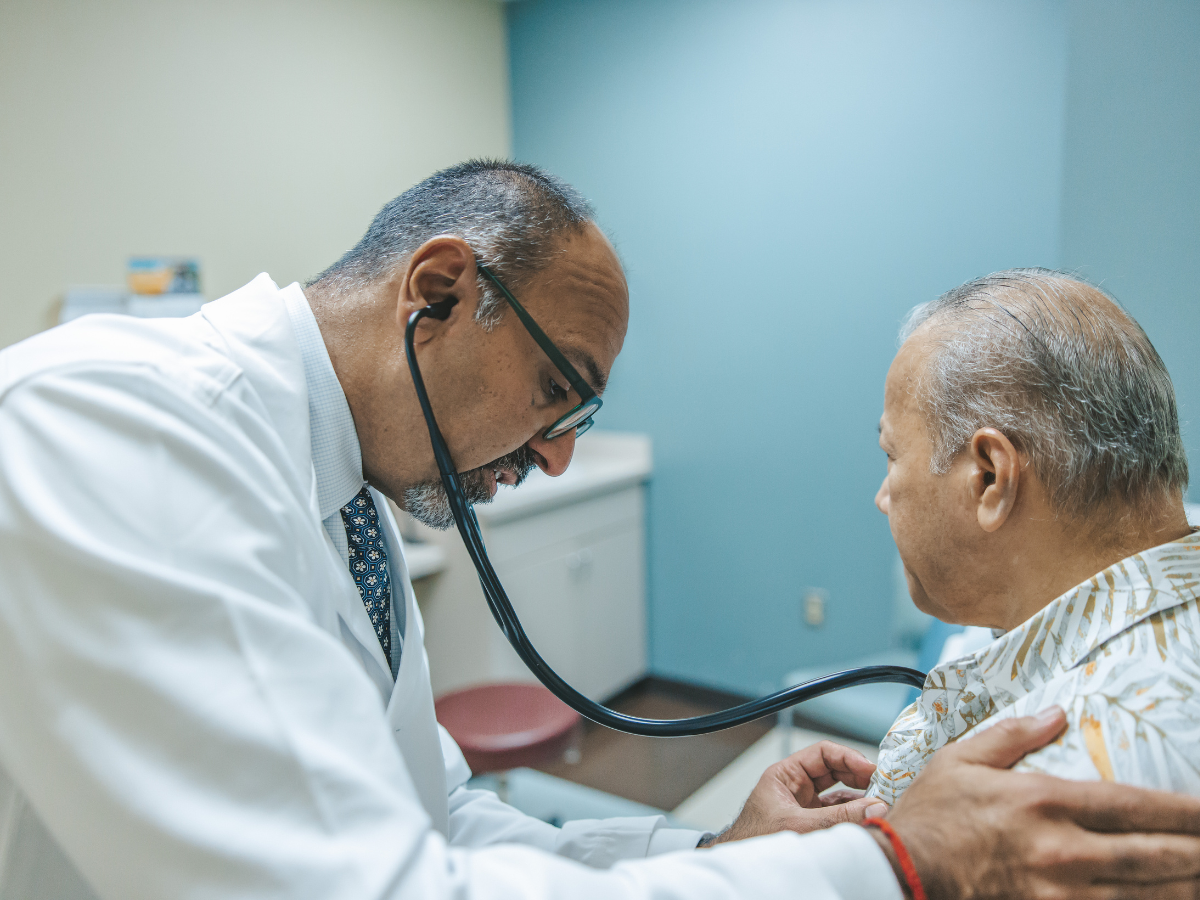

Keith Walker was on the verge of a medical crisis without even realizing it. His journey to emergency open-heart surgery highlights the critical importance of proactive health checks and the swift, coordinated action of the Ascension St. Vincent team.
Walker's health concerns began with a routine check up. While going over his health history, he mentioned occasional chest pain that would come with anxiety. A stress test, performed on November 17th, was the turning point. The very next day, while preparing for a long haul trucking trip, Walker received an urgent call from his Primary Care Physician. "She goes, 'Where you at?' And I said, 'Well, I was going to go to South Dakota.' She goes, 'Well, I'm going to postpone that trip. I'm going to pull you out of the truck.' She goes, 'You've got to go get a counter section tomorrow.'"
Dr. Douglas Sheffer, Medical Director of Cardiovascular Services for the South Region of Ascension St. Vincent, confirmed the gravity of the situation. "His situation was critical at the time of his stress test and diagnosis. While a severe condition like Mr. Walker’s is more common at an older age,” Dr. Sheffer added, "we do see severe obstructive coronary artery disease quite commonly at his age."
The events that followed were a blur for Walker. He was sent to Ascension St. Vincent in Evansville, and quickly learned that open heart surgery was necessary due to the extent of the blockage. "I just remember getting admitted on a Thursday and going, you know, going into surgery on a Friday morning. I mean, it just hit me fast.," Walker shared. He later learned the speed was life-saving. "From my understanding, I probably would have died sometime that week."
The swiftness of his diagnosis and treatment was a testament to the care at Ascension St. Vincent. Dr. Sheffer emphasized the team effort, stating, "Our staff went out of their way to help facilitate high-quality expedited care and his critical situation. As a physician, I could not have helped Mr. Walker to this extent without the team effort from our office staff and hospital."
After just six days in the hospital, Walker was recovering and feeling better than he had in years. "I feel great. I tell some of my friends, everybody asked me how I feel and I said, you know, I feel better now than what I did when I was in my 30s. I've got a whole lot more energy. I breathe a lot better."
He recalled noticing a difference almost immediately after surgery. "I would say probably about the third day after I was out of surgery, I noticed my breathing. And then when I was walking through the hospital, you know, it seemed like each day I was walking further and further and feeling a whole lot better."
He realized he had been declining so gradually that he didn't recognize his true baseline. "I did not realize how bad shape I was."
Walker had high praise for the care he received. "I can't say enough about, I mean, everybody was really professional and on their game. No problem with any of the doctors. No problem at all any with the nurses. I mean, the nursing staff is really excellent."
Reflecting on his experience, Walker has a clear message for others who might be on the fence about seeing a doctor for heart-related concerns: "Don't hesitate. I just passed it all off on anxiety and stress and stuff like that, not realizing, dude, you're on the verge of having a stroke or heart attack."
Dr. Sheffer echoed the sentiment on the importance of proactive care: "It is extremely important as we age to keep track of blood pressure, blood sugar and cholesterol to help lower our risk factor for coronary artery disease. It is also very important to report any potential symptoms to your primary care doctor or cardiologist. The symptoms include fatigue, shortness of breath with exertion and chest tightness/pain/pressure."
Keith’s experience serves as a powerful reminder that sometimes, feeling "just okay" can mask a critical health issue, and that the combined efforts of dedicated medical professionals can make all the difference.