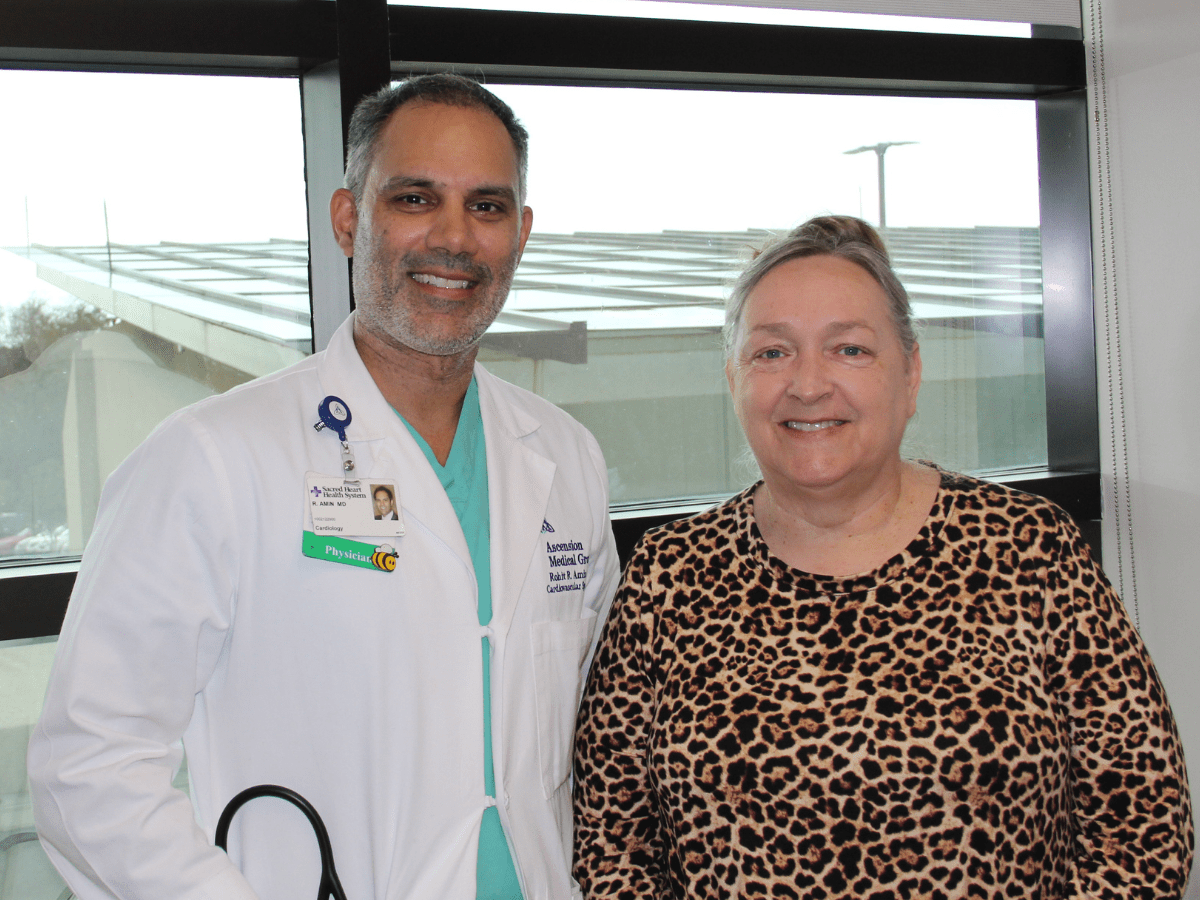
66-year-old Kathy Simmons has struggled with high blood pressure since her mid-40s. Despite efforts with multiple medications, diet, and exercise, her blood pressure was dangerously high, contributing to coronary artery disease, a heart attack in 2019, and even white matter disease in her brain.
"I was willing to try anything to get my blood pressure down," Simmons said.
For people like Simmons battling chronic, uncontrolled high blood pressure, a newly FDA-approved, minimally invasive procedure is offering another treatment option. Renal denervation is proving highly effective for some patients with resistant hypertension, and Ascension Sacred Heart Pensacola is leading the way in Northwest Florida.
Its impact could be significant for the region, especially in Escambia County, which ranks well above the state average for hypertension-related hospitalizations.
Often called the "silent killer," hypertension can lead to serious health issues like heart attacks, strokes, and kidney damage. While typically managed with medications and lifestyle changes, a significant number of patients remain resistant to drug therapy. Renal denervation targets these patients.
"Renal denervation is a technique, a minimally invasive procedure that allows us to help improve the blood pressure control without adding additional medications to a certain group of individual patients," explains Dr. Rohit Amin, Interventional Cardiologist at Ascension Sacred Heart. The catheter-based procedure involves ablating overactive nerves in the renal arteries, which helps to quietly reduce blood pressure over time.
Dr. Amin and fellow Ascension Interventional Cardiologist Dr. Mark Grise are the only two physicians in the region performing the procedure. Alongside their dedicated multidisciplinary hypertension clinic, they have treated 15 to 20 patients since 2024. The technology, used in Europe for over five years, was first approved by the FDA for use in the U.S. in late 2023. Widespread availability has been limited by reimbursement challenges, but it is rapidly expanding following a finalized Medicare National Coverage Determination (NCD) in late 2025.
Simmons is a shining example of what is possible. Consistently high blood pressure readings, often in the 150s and 160s (systolic), were the norm for many years, making her a great candidate for renal denervation.
Following the hour-long, same-day procedure last March, Simmons saw remarkable results within just one month. Her blood pressure dropped significantly and it’s stayed that way. “When I sit down and I get a reading that's like 119 over 69, and 125 over 72, that to me is exciting.”
"I have felt more at peace. I’ve been feeling more relaxed, and just excited about what’s happening in my life," she shared. "I have had more energy."
Dr. Amin describes Simmons as a "hyper-responder," noting that her results, a significant and sustained reduction in blood pressure within a month, are what they ideally hope for.
Ascension Sacred Heart is also a national leader in further understanding the new technique’s impact, conducting three clinical research trials on renal denervation. “We are one of 25 sites in the U.S. and one of 50 sites in the world that participate in this clinical study. We're trying to figure out what is the right group of patients that respond the best to this technology,” added Dr. Amin.
“I hope that not renal denervation alone, but just the attention to the treatment of hypertension will improve and increase because of renal denervation”, said Dr. Amin.
Simmons is participating in the studies, driven by a desire to help others. "I wanted to be part of the research for them to collect that data to help somebody else to be able to fight and make that decision."