February is American Heart Month, an important time to raise awareness about atrial fibrillation, or AFib, a condition that affects millions of people each year. AFib is the most common type of heart arrhythmia and can be alarmingly serious, as it increases the risk of stroke by five times and doubles the risk of heart-related deaths. Unfortunately, many people don’t even know they have it. Some have no symptoms at all, while in others, symptoms are intermittent and misunderstood.
The need for awareness is growing, with a recent study by the CDC projecting a huge spike in cases by 2030—over 12 million, doubling the cases since 2010.
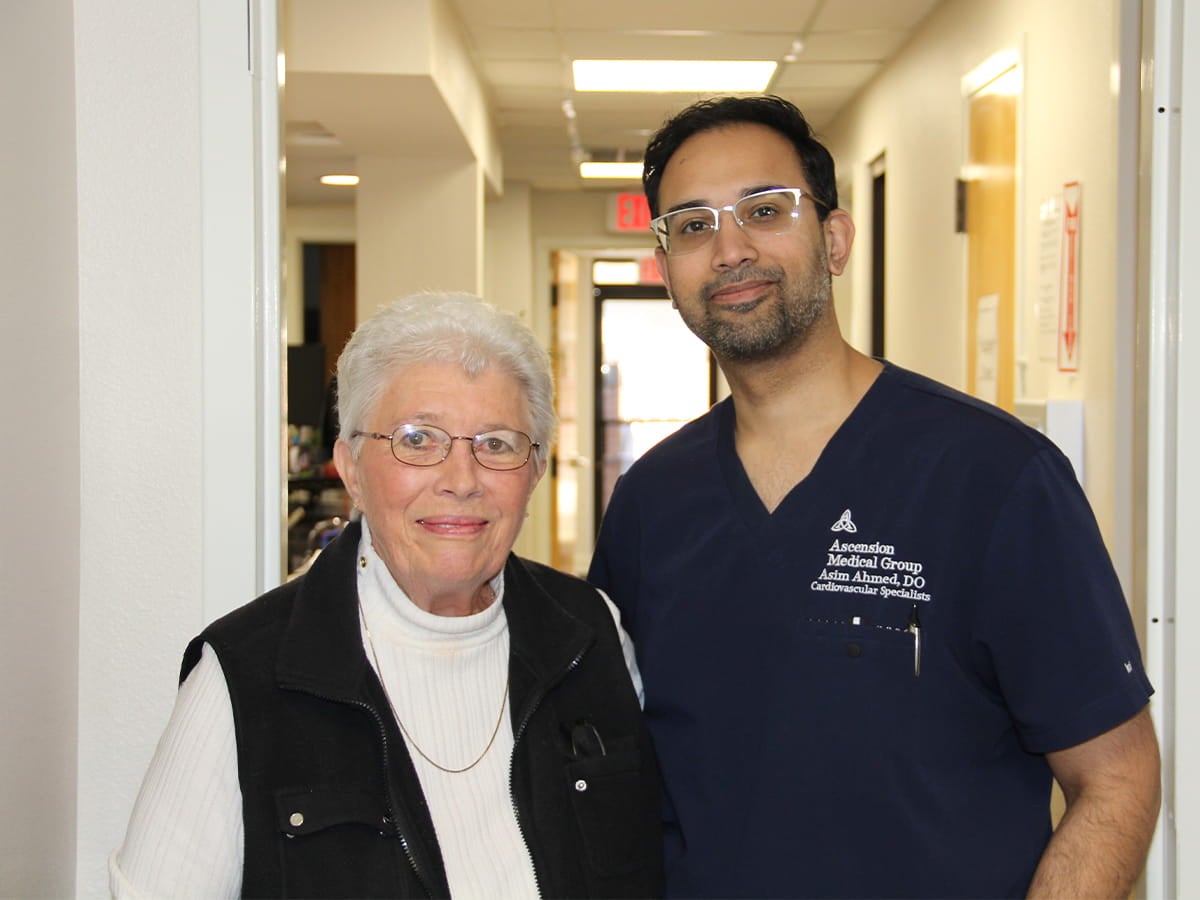
Pensacola resident Carolyn Caplinger, 69, understands the dangers of AFib very well.. For about 30 years, Carolyn experienced symptoms like heart racing and dizziness, but they gradually worsened until she sought a checkup. About six years ago, she was diagnosed with uncontrolled AFib by her physician, Dr. Asim Ahmed, electrophysiologist and cardiologist with Ascension Sacred Heart Pensacola.
"I knew something was getting worse," Carolyn said, describing how her physical well-being was "up and down a lot."
“Ultimately it's not just having AFib so much as it's the uncontrolled consequences that come from it,” said Dr. Ahmed. “If you leave it alone and uncontrolled for a long time, it can cause problems. Just like high blood pressure, just like diabetes, just like any other condition that we can get, if you recognize it and treat it, you'll prevent any long term complications or harm”.
Doctor Ahmed says advancements in research and technology have made treating AFib much more effective.
Caplinger was initially hesitant about invasive procedures, so Dr. Ahmed first tried treating her condition with various medications. When the medications proved ineffective, Carolyn agreed to undergo a cardiac ablation, a minimally invasive procedure that treats arrhythmias by creating small scars in the heart tissue to block faulty electrical signals. Combined with a reduced complement of medication, it has eliminated her Afib, greatly increasing her quality of life and decreasing the chance of serious heart conditions.
"I felt a lot better, I got my strength back," she shared. The successful treatment has allowed her to return to a normal lifestyle, including regular trips to the gym and gardening—something she was previously limited from doing due to feeling unwell and dizzy.
Advancements in ablation technology is making it a much more common and effective treatment for Afib.
“Ablation until recently was always thermal, meaning you either burn or freeze the tissue to target it.” said Dr. Ahmed. “But we have newer technology called pulse field ablation which in general is safer. It applies some of that energy to different parts of the heart. So, before you worry about a little bit of collateral, and with this, you're able to kind of navigate it a little bit smoother and kind of target areas safer”
Carolyn is now committed to raising awareness, stating that the best medical care she’s ever received was from Dr. Ahmed and his staff.
Her core message to others experiencing similar symptoms is clear: "Get it addressed soon so you can get back to having a better life and don't have that risk of having a stroke. I wish I had done it sooner.”