Healthcare continues to change quickly. But some of the biggest challenges patients face are not new.
When people cannot get the help they need early, health issues can become more serious. Access to a primary care provider, medication costs, and transportation can make it harder to stay healthy.
At Ascension, we care for more than one million Medicaid and uninsured patients each year. We see firsthand what happens when people struggle to stay connected to care. We also see an opportunity to build a better model.
Transforming Medicaid means changing how we support the people who rely on it. We cannot wait until people are sick to connect them with care. We have to help them stay healthier in the first place.
That requires us to move care upstream by reaching people earlier and removing barriers.
Start with the person, not the system
Healthcare organizations often think in terms of hospitals, clinics, reimbursement, insurance plans, and service lines.
Patients do not.
They think about whether they can get an appointment. Whether their visit will be covered by insurance. Whether they can afford their medication. Whether they have transportation. Whether they understand what to do after they leave the hospital.
For patients receiving Medicaid, these things can add up quickly, making it harder to manage their health over time.
That is why our work begins with understanding the people and communities we serve. You cannot redesign care effectively without first understanding where the experience is breaking down for patients.
Across Ascension, we use data, patient feedback, community engagement, and Social Determinants of Health screenings to better understand the barriers people face. We have conducted more than 5.4 million of these screenings to help identify challenges such as transportation, food insecurity, and medication access. We have also held focus groups in communities to hear directly from the people we serve and better understand their experiences and what they need.
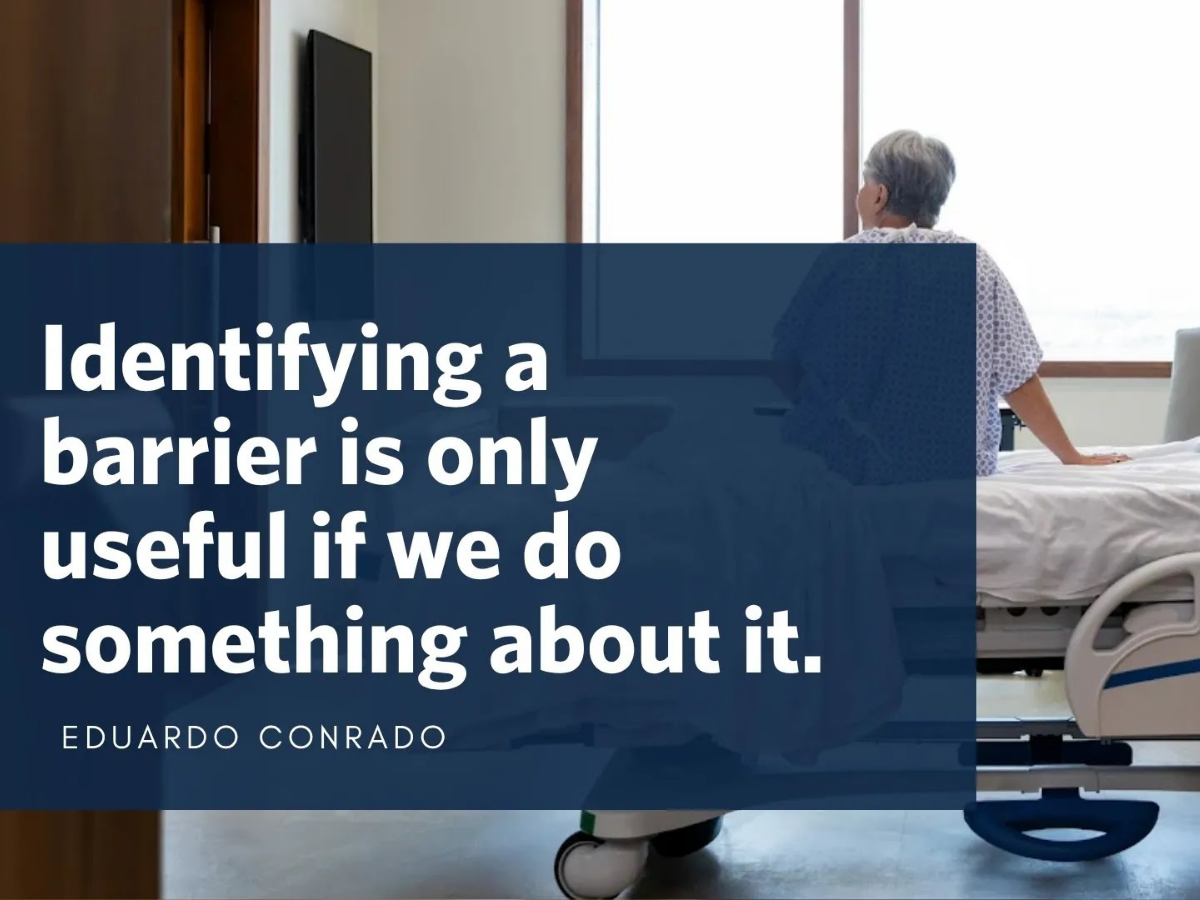
But identifying a barrier is only useful if we do something about it.
Our goal is to connect those insights directly to action. That can mean helping someone establish a relationship with a primary care provider, finding a way to make medication affordable and accessible, connecting a patient with transportation, or making sure someone leaving the hospital has a clear path to the next step in their care.
Each of these steps can make a real difference for patients.
Move care upstream
One of the clearest examples comes from our Kansas ministry.
A patient with heart failure was repeatedly coming back to the hospital while waiting for Medicaid coverage. Several of the medications he needed cost almost $800 out of pocket.
Our pharmacy team worked across several medication assistance programs to make sure he left with every medication he had been prescribed at no cost to him. He was also connected with transitional care and cardiology for follow-up.
Over the next several months, his health improved and he did not need to return to the hospital. Instead, he was able to stay home with his family.
That is what moving care upstream looks like.
Instead of waiting for the patient's condition to get worse, the team identified what was getting in the way and addressed it.
We are taking this same approach across Ascension. In FY26, our teams secured $219 million in financial assistance through medication affordability programs, helping more patients access medications.
In Wisconsin, maternal health navigators are helping expectant mothers get the prenatal and postpartum support they need. This work has doubled prenatal care attendance and increased postpartum visit attendance by 60%.
Through partnerships with Federally Qualified Health Centers, we are also improving care coordination so patients can transition between organizations without losing continuity in their care.
We are making it easier for patients to move from hospitals to post-acute care, access transportation, and connect with primary and preventive care.
The programs may be different, but the principle is the same. Act earlier, remove friction, and help people stay connected to care.
Build around outcomes, not volume
Changing how we deliver care also requires changing how we define success.
Healthcare has traditionally focused on measures like visits, procedures, and admissions. Those measures matter, but they do not tell us whether someone's health is improving.
Instead, we focus on outcomes. Over the past three years, Ascension has expanded access to breast and colorectal cancer screenings, especially in communities where people face greater barriers to care. We are seeing the impact. Late-stage breast cancer diagnoses among our primary care patients decreased 35%, and late-stage colorectal cancer diagnoses decreased 23%. Nearly 8,000 patients diagnosed with cancer were connected to the treatment they needed.
We should also be asking different questions.
Are more people receiving preventive care? Are we reducing avoidable emergency department visits? Are people moving more smoothly between care settings? Are we improving outcomes while lowering the total cost of care?
This requires health systems to look beyond their own walls.
Hospitals cannot solve challenges like transportation, food insecurity, and medication affordability on their own. Federally Qualified Health Centers, community organizations, payers, pharmacies, physicians, and health systems all bring different capabilities.
Our responsibility is not to own every part of the solution. It is to make those parts work better together for the patient. In many communities, the answer is not to build something new. It is to connect the resources that are already there.
A better model for Medicaid can be a better model for everyone
Medicaid will continue to change. Health systems will have to adapt. But we should not wait for policy to determine what comes next.
We already know what a better model for Medicaid can look like.
We need to make it easier for people to access the right care in the right setting at the right time. We need to identify barriers earlier. We need stronger connections between clinical care and community resources. And we need to measure success by whether people are healthier, not simply by how much care we provide.
This work is especially important for people who rely on Medicaid or have no insurance. But the model we build can improve healthcare for everyone.
A system that is easier to navigate, more connected, more proactive, and designed around people is a better healthcare system.
That is what Medicaid transformation means to us at Ascension, and it is what we are working to build.