Effectively caring for patients requires not only having the right information at the right time for each patient, but also having that information presented in a way that is easily read and understood. This is even more true today as healthcare delivery transforms.
The information clinicians need spans the care continuum with increasing complexity and scale. Too often, clinical information is buried in siloed electronic and paper records that are scattered across hospitals, clinics, urgent care centers, pharmacies, physician offices and labs, making it difficult to deliver coordinated and precise care. When the information is finally retrieved, oftentimes it is poorly organized and fragmented. In short, most clinicians work in an environment where data is incomplete, inaccessible and delivered in siloed, disjointed bursts of information without context.
As recently reported in the press, Ascension and Google are collaborating to solve this problem. In order to empower our caregivers to provide safer, more effective and efficient care 24/7, we are testing point-of-care tools for our clinicians to quickly have access to more complete and specifically tailored patient data. In the delivery of these capabilities, our patients’ records – your records – will continue to be securely protected in this enhanced ecosystem just as they are today and will be used only as necessary by a limited number of experts in the development of these tools so that we can provide better healthcare to those we serve. Under no circumstances is Google allowed to use this data for other purposes or combined with any other Google consumer data.
Here’s an example: Today, a patient may be transferred to one hospital from another related hospital that uses a different electronic health record (EHR) system. In many instances, EHRs across communities, including hospitals, clinics, urgent care sites and physician offices, can’t talk to each other. This means that the information about tests, medications, vital signs and history from the first hospital is not readily accessible to the clinicians at the second hospital who need it to guide treatment. Our collaboration with Google to create a single, integrated view of health records from different hospital and clinic EHRs within the Ascension hospital system begins to address that problem.
The fact that today's electronic health record systems don't talk to each other is a major problem that can have serious consequences for patient care and causes caregiver frustration and burnout. Today, much of a caregiver’s time is taken up hunting through poorly organized EHRs trying to find important clinical information – time that could be used to provide patient care is wasted on information gathering.
With Ascension privacy and security protections in place to protect patients’ health information, Ascension doctors and nurses are working with Google to test a secure clinical search capability that will bring the information within a patient’s entire medical record to our clinician’s fingertips. The clinician will be able to specify the exact information that they are looking for and it will be retrieved quickly and in combination with other clinically relevant data. For example, rather than hunting through an EHR to see if a patient had a previous allergic or intolerance reaction to a drug, a clinician could simply query the consolidated clinical data and have any instance of allergy or intolerance to that drug presented to them. This capability can be vitally important in emergency situations, where timeliness and completeness of information can be crucial in saving a patient’s life.
The private clinical search capability tool will not be generally available for use in the clinical setting until it is ready, and patients’ medical records will continue to be subject to Ascension’s extensive security protections and policies both during development and when the tool is introduced. Our patients’ data will only be accessible to our clinicians.
Since 2005, tens of billions of dollars have been spent on the creation of siloed, clunky electronic health records systems. As indicated in a recent Yale study, the transition to electronic health records was supposed to improve the quality and efficiency of healthcare for doctors and patients alike, but it has failed miserably. The study’s authors gave these technologies an “F” for usability from healthcare professionals, finding in addition that they contribute to high rates of professional burnout. EHRs have been called “death by a thousand clicks.” The promise of the EHR has not been fully realized and interoperability across the various clinical ecosystems remains far from complete. In short, the patients and clinicians have not adequately benefitted from this massive investment.
The Department of Health and Human Services, the Centers for Medicare and Medicaid Services, and the Office of the National Coordinator for Health Information Technology have outlined bold visions to finally make the health information in our systems interoperable, while ensuring patient privacy consistent with the strict letter and the spirit of HIPAA. We have accepted the challenge.
We are working hard to improve patient care; that is what this is all about. To do that, we need all of our patients’ health information securely available, accessible and easily understood by those who are providing care, at the point of care. Google is helping us do that. This new capability keeps our eye firmly on this crucial goal: having the right information at the right time for each patient.
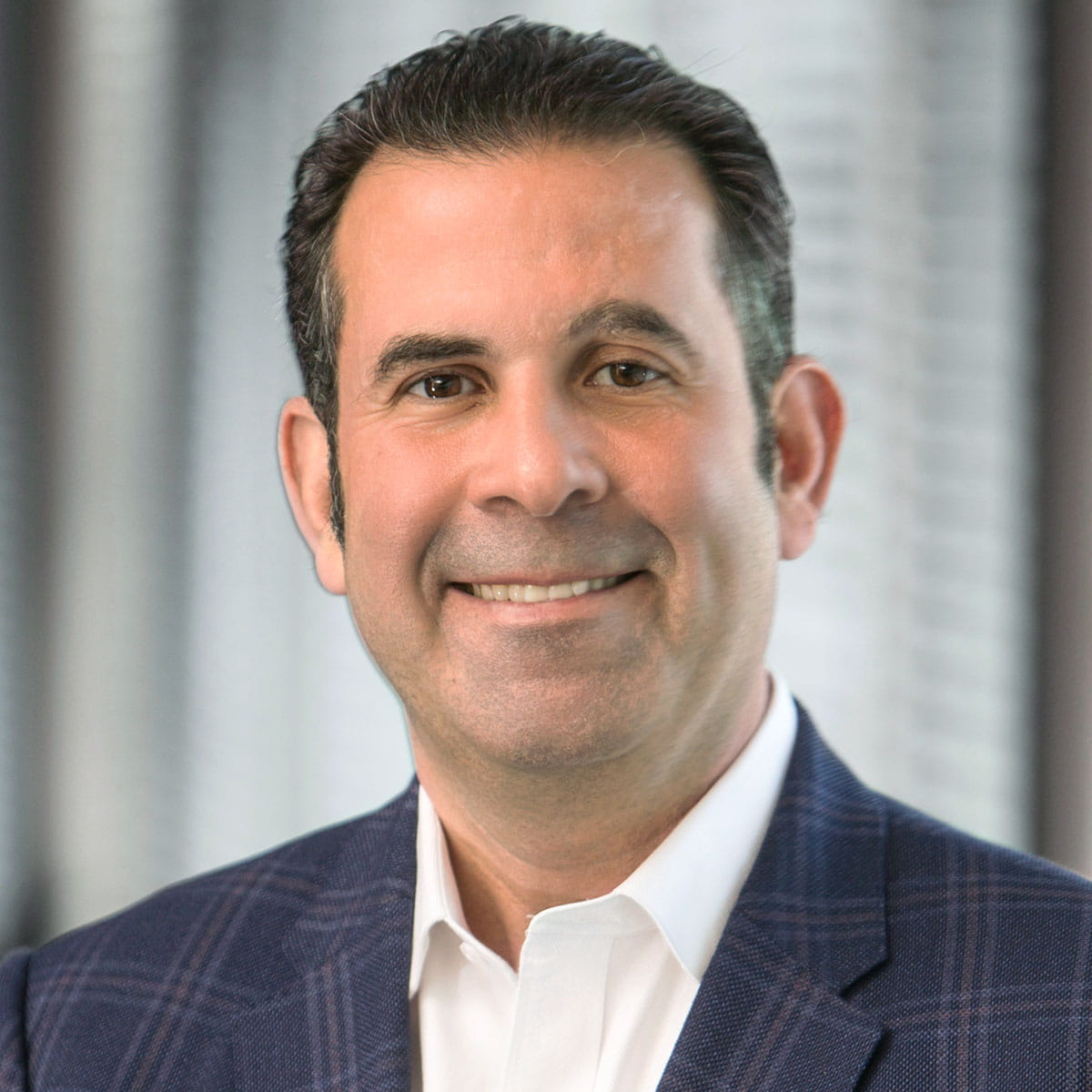
Eduardo Conrado
Executive Vice President, Strategy and Innovation, Ascension